
Introduction
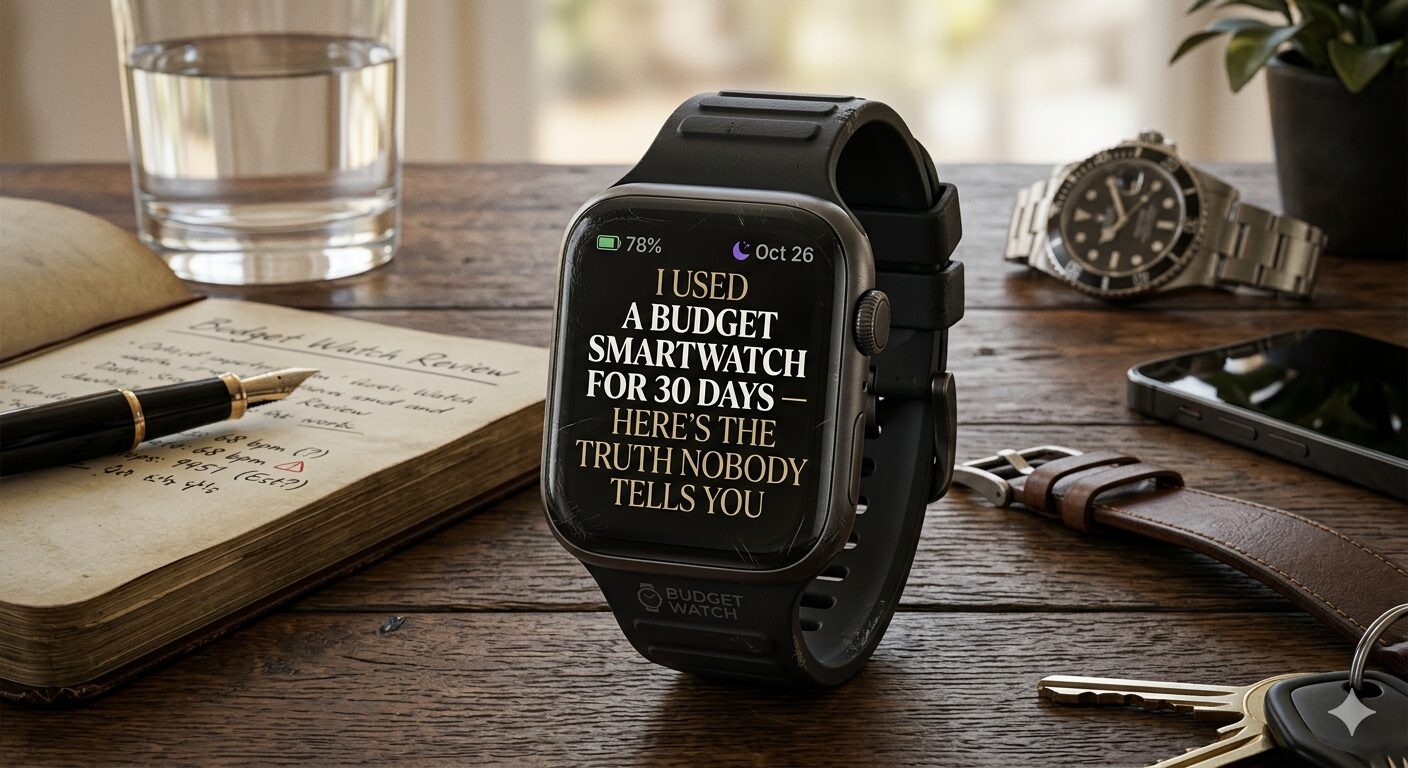
When I bought my first budget smartwatch, I had simple expectations. I thought it would help me track my steps, show notifications, and maybe make my daily routine a little easier.
But after using it continuously for 30 days, I realized something important — what brands show and what you actually experience are two very different things.
This post is not based on specs or marketing claims. It’s based on real, daily usage — the small things you notice only when you live with a smartwatch every day.
If you are planning to buy one, this might help you avoid some mistakes I made.
The First Few Days Feel Amazing
When you start using a new smartwatch, everything feels exciting.
You check:
- Steps again and again
- Heart rate multiple times
- Notifications instantly
It feels like you’ve upgraded your lifestyle.
But this phase doesn’t last long.
After 4–5 days, the excitement slowly settles down, and you start using only what actually matters.
What You Actually Use Daily
After a few days, your usage becomes very simple.
You mainly use:
- Time
- Notifications
- Step tracking
That’s it.
All those extra features like:
- Multiple sports modes
- Fancy watch faces
- Advanced tracking
👉 You rarely use them regularly.
This was my first realization — most features look good, but only a few are truly useful.
Battery Life Reality (Biggest Surprise)
Before buying, I believed the battery claims.
“7 days battery” sounded perfect.
But in real life, it was very different.
When I used:
- High brightness
- Bluetooth calling
- Notifications
👉 The battery lasted around 2–3 days only
And honestly, this felt disappointing at first.
But later I understood — more features always mean more battery usage.
So the problem was not the watch, but my expectation.
The Truth About Health Tracking
One of the main reasons people buy smartwatches is health tracking.
I used:
- Heart rate monitoring
- Sleep tracking
- Step count
But after some time, I noticed something important:
👉 The data is useful for awareness, not accuracy.
For example:
- Step count sometimes felt slightly off
- Sleep tracking was not always perfect
At first, I was confused.
But then I realized — these watches are not medical devices. They are just helping you stay aware of your activity.
Notifications: Useful but Sometimes Annoying
Notifications are one of the most useful features.
You don’t need to check your phone again and again.
But there is another side.
Sometimes:
- Too many notifications become distracting
- Constant vibration can feel annoying
After a few days, I had to manually turn off notifications for some apps.
This improved my experience a lot.
Design vs Comfort: What Matters More?
When buying a smartwatch, I focused a lot on design.
I wanted something that looks premium.
But after using it daily, comfort became more important.
If the watch:
- Feels heavy
- Causes irritation
👉 You will not enjoy wearing it all day
This is something I didn’t think about before buying, but it matters a lot.
The Biggest Mistake I Made
My biggest mistake was expecting too much from a budget smartwatch.
I expected:
- Perfect accuracy
- Long battery life
- Smooth performance
But in reality:
- It performed well for basic tasks
- It had limitations (which are normal at this price)
Once I accepted this, my experience improved.
Comparison With Other Budget Watches
After using it for a month, I also tried comparing it with other watches from brands like Noise and boAt.
What I noticed:
- Most budget watches offer similar features
- The difference is mainly in design and small performance details
👉 No watch is perfect in this range
This means choosing the right smartwatch is more about your preference than features.
Strengths (Pros)
- Useful for daily basic tasks
- Notifications reduce phone usage
- Helps stay aware of activity
- Affordable entry into smart devices
Weaknesses (Cons)
- Battery life is less than expected
- Health tracking is not very accurate
- Many features are rarely used
- Can become distracting if not managed properly
My Honest Opinion
After using a budget smartwatch for 30 days, my opinion is very clear.
👉 A smartwatch is useful, but only if you understand its purpose.
It is not a life-changing device.
It is a small tool that makes daily tasks easier.
If you expect too much, you will feel disappointed. But if you use it for basic convenience, you will actually enjoy it.
Conclusion
Buying a budget smartwatch is not about choosing the “best” one.
It is about understanding what it can and cannot do.
After 30 days of usage, I learned one simple thing:
👉 The value of a smartwatch is not in its features — it is in how you use it.
If you keep your expectations realistic, it can be a useful addition to your daily life.
FAQs
Q1. Is a budget smartwatch worth buying?
Yes, if you want basic features and understand its limitations.
Q2. How long does the battery actually last?
Around 2–4 days in real usage.
Q3. Are health features accurate?
They are useful for general tracking, not exact accuracy.
Q4. What is the most useful feature?
Notifications and step tracking.
Q5. What should I check before buying?
Comfort, battery expectations, and your actual usage.
If you looking for smartwatch battery life…
If you looking budget smartwatch…
If you looking about perfect smartwatch…

Author: Megha Acharya
Megha Acharya is a tech journalist and gadget reviewer specializing in Wearables. With a background in Education, They provide data-driven reviews and practical buying advice for the modern tech consumer.
Author: Megha Acharya
Megha Acharya is a tech journalist and gadget reviewer specializing in Wearables. With a background in Education, They provide data-driven reviews and practical buying advice for the modern tech consumer.