
Introduction
Buying a smartwatch for the first time feels exciting. The market is full of attractive designs, long feature lists, and bold promises. From fitness tracking to Bluetooth calling and smart notifications, smartwatches appear to offer everything in one small device.
But this excitement often turns into disappointment after a few days or weeks of use.
Not because smartwatches are bad — but because first-time buyers often make avoidable mistakes. These mistakes lead to unrealistic expectations, poor buying decisions, and frustration with perfectly good devices.
This article explains the most common smartwatch mistakes first-time buyers make, why they happen, and how you can avoid them. If you understand these points before buying, your smartwatch experience will be far more satisfying.
Buying your first smartwatch can feel exciting.
But at the same time, it’s also where most people make small mistakes that later turn into big regrets.
The problem is not that smartwatches are bad.
The problem is that buyers don’t fully understand what they actually need.
And that’s exactly why avoiding these common mistakes can save both money and frustration.
Mistake 1: Expecting a Smartwatch to Replace a Smartphone
Mistake 1: Not Checking Phone Compatibility
This is one of the biggest mistakes beginners make.
For example, Apple Watches only work properly with iPhones, and many Android watches don’t fully support iOS.
If you ignore compatibility, your smartwatch may lose important features or may not work at all.
Always check compatibility before buying.
This means many buyers end up paying for features they never actually use.
That’s why understanding your usage is more important than choosing the most feature-packed watch.
This is the most common and biggest mistake.
Many first-time buyers expect a smartwatch to work like a mini smartphone — replying to messages easily, browsing apps smoothly, and handling complex tasks. But smartwatches are companion devices, not phone replacements.
Reality Check
Smartwatches are designed for:
- Quick glances
- Short interactions
- Simple tasks
They are not meant for:
- Long typing
- Heavy app usage
- Full internet browsing
Understanding this limitation prevents disappointment.
Mistake 2: Ignoring Battery Life Before Buying
Mistake 2: Expecting Unrealistic Battery LifeMost brands advertise battery life under ideal conditions.But real usage includes notifications, brightness, and tracking — which reduces battery life significantly.For example, a smartwatch advertised for 7 days may last only 3–5 days in real usage.Understanding this difference helps avoid disappointment.
Battery life often gets ignored in favor of features and design. Buyers see attractive displays and calling features but forget to ask one important question:
How often will I need to charge this watch?
Why This Matters
A smartwatch with poor battery management quickly becomes annoying, no matter how good it looks.
Many first-time buyers are surprised when:
- The watch needs charging every 2–3 days
- Battery drains faster with calling enabled
This is normal behavior — not a defect.
Mistake 3: Believing Health Data Is Medical-Grade
Mistake 3: Buying Too Many Features
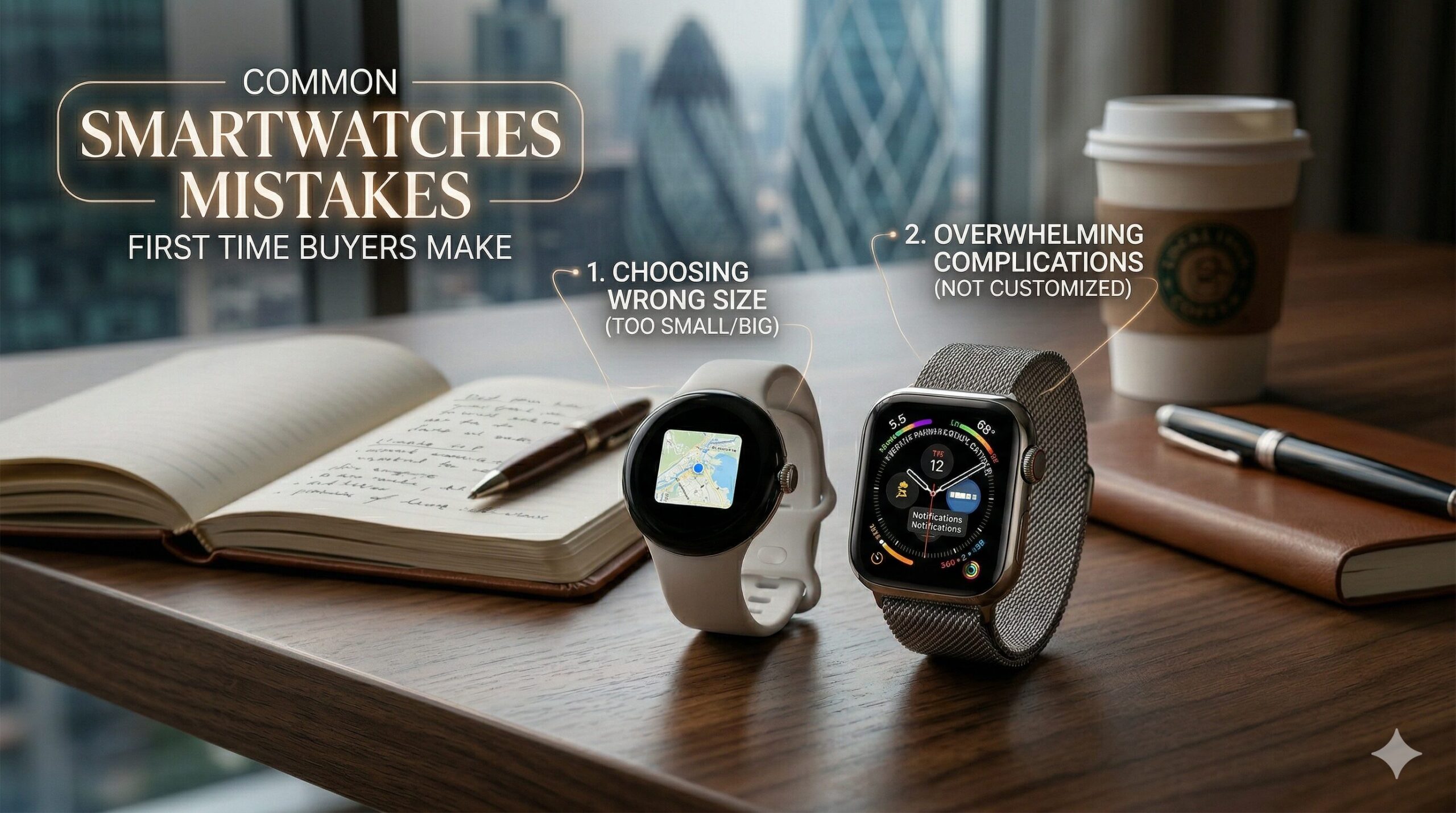
Many first-time buyers choose a smartwatch with maximum features.
But the truth is — more features don’t always mean better experience.
Smartwatches are small devices, and too many features can actually make them confusing and less useful.
It’s better to choose useful features instead of all features.
Smartwatches offer heart rate, sleep tracking, and SpO₂ readings. This makes some buyers believe the data is medically accurate.
This is a dangerous misunderstanding.
The Truth
Budget and mid-range smartwatches:
- Provide wellness trends
- Offer general health awareness
- Are not medical devices
They cannot diagnose diseases or replace professional medical equipment.
Using smartwatch data responsibly is important for user safety.
Mistake 4: Buying Based Only on Design
Mistake 4: Ignoring Size and Comfort
A smartwatch may look great online, but feel uncomfortable in real life.
Size, weight, and strap quality matter more than most people think.
If the watch is too big or heavy, you may stop wearing it regularly.
Comfort is just as important as features.
Design matters, but it should not be the only factor.
Many buyers choose a smartwatch because:
- It looks premium
- It matches outfits
- It looks trendy online
But they forget to consider:
- Comfort
- Weight
- Button placement
- Strap quality
A beautiful smartwatch that feels uncomfortable becomes irritating over time.
Mistake 5: Overpaying for Features You Will Never Use
Mistake 5: Believing Marketing Claims
Many brands use strong marketing terms like:
- “Replace your smartphone”
- “Medical-level accuracy”
- “Long battery life”
But in reality, smartwatches are still limited devices.
Understanding this helps you set realistic expectations and avoid disappointment. 3
First-time buyers often assume that more features automatically mean better value.
They buy smartwatches with:
- Advanced sports modes
- Built-in GPS
- Multiple sensors
But later realize they only use:
- Step counting
- Notifications
- Time display
Paying extra for unused features leads to regret.
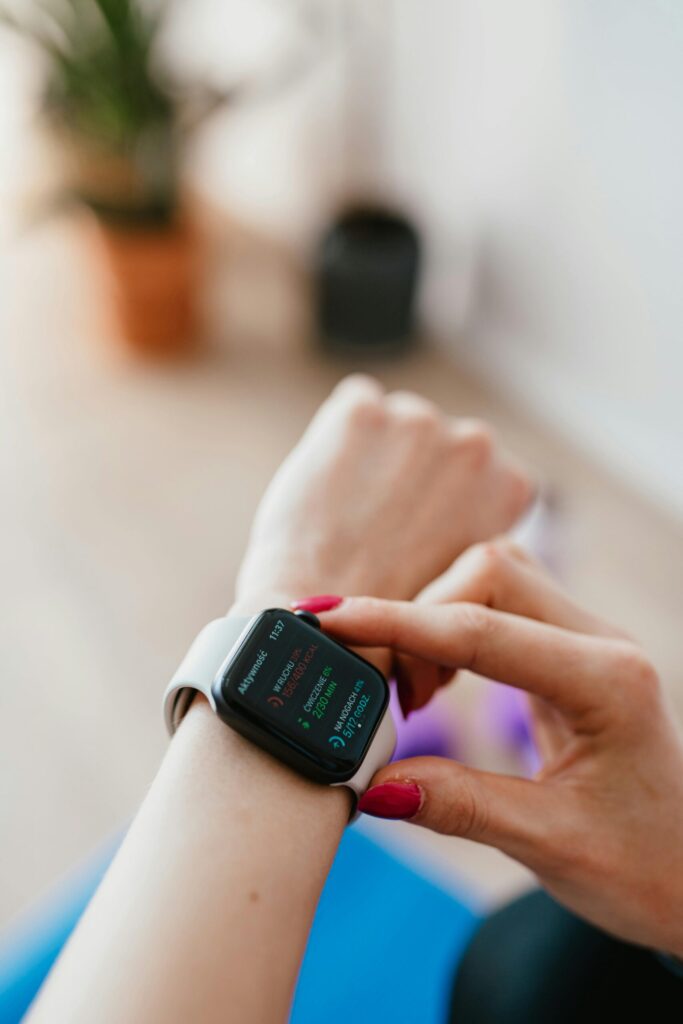
Smartwatch features.
Mistake 6: Not Checking Companion App Quality
A smartwatch is only as good as its companion app.
Many buyers focus only on the watch hardware and forget to check:
- App stability
- Data accuracy
- Ease of use
If the app is confusing or buggy, the overall experience suffers — regardless of how good the watch hardware is.
Mistake 7: Expecting Perfect Fitness Accuracy
Fitness tracking is helpful, but it is not perfect.
First-time buyers often expect:
- Exact step counts
- Perfect calorie calculations
- Precise sleep stages
In reality, smartwatch fitness data is estimated, not exact.
The goal is habit awareness, not professional-level accuracy.
Mistake 8: Ignoring Comfort for Long-Term Wear
Many buyers don’t consider how the watch feels after:
- 8 hours of wear
- Sleeping with it
- Working out
Heavy watches or uncomfortable straps can cause irritation, especially during sleep tracking.
Comfort should always be tested or researched.
Mistake 9: Believing Brand Claims Without Reading User Experience
Marketing highlights best-case scenarios.
But real-life usage:
- Varies from person to person
- Depends on settings and habits
Reading honest reviews and understanding real-world usage helps avoid disappointment.
Mistake 10: Buying a Smartwatch Without Understanding Personal Needs
The biggest mistake is buying a smartwatch without asking:
- Why do I need it?
- What will I use daily?
- What can I ignore?
Without clarity, buyers often choose the wrong product.
Why These Mistakes Happen So Often
These mistakes occur because:
- Smartwatch marketing is aggressive
- Feature lists are confusing
- First-time buyers lack experience
Understanding limitations is more important than chasing specifications.
How to Choose the Right Smartwatch (Simple Guide)
Before buying, answer these questions honestly:
1. How often will I use calling?
If rarely, don’t prioritize calling-heavy models.
2. Do I mind charging every few days?
If no, smartwatches are fine.
If yes, consider fitness bands.
3. Do I want simplicity or features?
More features mean more complexity.
4. Will I wear it all day and night?
Comfort becomes crucial.
Who Should Buy a Smartwatch?
Smartwatches are best for:
- Students
- Office workers
- Casual fitness users
- People who like notifications and calling
Who Should Avoid Smartwatches?
Smartwatches may not suit:
- Minimalists
- Users who dislike charging
- People who want distraction-free wearables
Such users may prefer fitness bands.
Can These Mistakes Be Fixed After Buying?
Some mistakes can be fixed:
- Adjusting settings
- Limiting notifications
- Managing expectations
Others cannot:
- Poor comfort
- Weak battery
- Wrong feature focus
That’s why choosing wisely before buying matters.
Why Understanding Limitations Improves Satisfaction
The Reality Most First-Time Buyers Don’t Know
Most people think they will use every feature in a smartwatch.
But in reality, users often use only 20–30% of the features regularly.
This means many buyers end up paying for features they never actually use.
That’s why understanding your usage is more important than choosing the most feature-packed watch.
Most smartwatch dissatisfaction comes from expectation mismatch, not product failure.
Users who understand limitations:
- Feel satisfied
- Use features wisely
- Appreciate value
Final Verdict: Smartwatches Are Not the Problem — Expectations Are
How to Avoid These Mistakes
- Always check phone compatibility first
- Focus on features you will actually use
- Don’t trust battery numbers blindly
- Choose comfort over design alone
- Keep your expectations realistic
Following these simple steps can help you make a much better decision.
Smartwatches are excellent tools when used correctly. They help manage time, track habits, and stay connected.
But expecting them to be something they are not leads to disappointment.
Avoiding the common mistakes discussed in this article ensures:
- Better buying decisions
- Higher satisfaction
- Long-term usability
I’ve seen many first-time buyers choose a smartwatch just because it looked premium or had more features.
At first, everything feels exciting.
But after a few days, they realize they only use basic features like time, notifications, and step tracking.
That’s when they understand — the best smartwatch is not the one with the most features, but the one that fits their daily life.
Conclusion
Making mistakes while buying your first smartwatch is common — but it’s also avoidable.
The key is to focus on your real needs instead of marketing promises.
A smartwatch should make your life easier, not more complicated.
If you choose wisely, even a simple smartwatch can feel more useful than an expensive one.
FAQs
Are smartwatches worth buying for first-time users?
Yes, if expectations are realistic.
Is battery life always poor in smartwatches?
No, it depends on usage and settings.
Can smartwatches replace phones?
No, they are companion devices.
Is fitness tracking reliable?
Yes, for general awareness and daily habits.
How to avoid regret after buying a smartwatch?
Understand needs, limitations, and real usage before buying.
I learned these the hard way. Here are the “Mistakes I Made While Buying My First Smartwatch”.
Battery life of smartwatch is very important, check out my “Battery Life Reality of Budget Smartwatches” so, no issue with battery life.

Author: Megha Acharya
Megha Acharya is a tech journalist and gadget reviewer specializing in Wearables. With a background in Education, They provide data-driven reviews and practical buying advice for the modern tech consumer.